

How to prevent hair fall and baldness: Hair fall and vitamin D
A very common query is how to prevent hair fall and baldness. There are lots of reasons for hair fall, including nutritional deficiency. Especially hair fall and vitamin D level have an intertwined relationship.
Among all causes, hair fall due to vitamin D deficiency is very common. Daily, around 50 to 100 hairs shed from each scalp is very normal. But when thinning, patchiness, or sudden large-scale shedding appears, it’s very terrifying and emotionally stressful.
There are lots of researches have been done to find the hair fall solution. Most researchers have found links between lower serum vitamin D levels in patients with diffuse hair fall compared to controls. Supplementation raises levels and reduces hair fall. But there are some other reasons behind hair fall and the affected person has to remove these causes as well.
How to prevent hair fall and baldness, you have to know about the hair growth cycle
There are four phases of hair follicle cycle. When hair falls, any one or most of these phases are disturbed.
These are:
- Anagen (Growth Phase):
Active, rapid cell division in the root (dermal papilla) produces the hair shaft. 2 to 7 years on the scalp, shorter for other body hairs (eyelashes). About 85-90% of scalp hairs are in this phase.
- Catagen (Transitional Phase):
A short, transitional phase where growth stops, the follicle shrinks, and hair detaches from its blood supply. About 10 days to a few weeks. Around 3% of hair.
- Telogen (Resting Phase):
A resting period where the hair is inactive but remains in the follicle, waiting to be shed. Up to 3 months (or longer for some body hairs). About 10-15% of hair.
- Exogen (Shedding Phase):
The final shedding of the old hair (club hair) as the follicle prepares for a new Anagen phase. About 100 hairs are shed daily.
Many hair loss problems are related to these phases. After febrile illness, hormonal changes, nutritional deficits, or stress, telogen effluvium (TE) occurs. In TE, a large proportion of follicles are pushed prematurely into the shedding phase.
Androgenetic alopecia (pattern hair loss) is a genetic sensitivity of follicles to androgen. This phase involves with progressively shorten Anagen or hair growth. Alopecia areata is an autoimmune attack that causes patchy loss. Each condition has different causes and treatments. And vitamin D may play an important role in some cases, but not all.

Hair Fall and Vitamin D Relationship
Vitamin D is also functions as a hormone. It has a widened level of functions in our body through the vitamin D receptor (VDR). Hair follicles have lots of keratinocytes. They are the special cells of hair follicles. They produce tough and flexible hair shafts, which divide until they die. These keratinocytes are very crucial for our hair growth, maintenance, regeneration, and making the immune defense strong for the scalp.
Vitamin D does lots of processes in newly created keratinocytes, and it’s increasing in numbers. It also has an anti-inflammatory effect on our skin health.
Hair follicles express through vitamin D receptors (VDR), which are essential for hair growth phases. VDR signaling participates in hair follicle cycling, differentiation, and local immune regulation in the scalp. VDR signaling influences hair-cycle biology and links vitamin D status to hair health.
When the serum vitamin D level drops below 25 to 20 mmol/L, deficiency symptoms start to show. It is common due to limited sun exposure, heavy clothing, or sunscreen use.
Without adequate vitamin D, hair follicles struggle in the Anagen (growth) phase and enter the telogen (resting) phase prematurely.
In a study, South Indian students with diffuse hair loss showed 81.8% vitamin D deficiency versus 45.5% in controls. Here, females were mostly affected.
Hair fall types and where vitamin D works
Hair loss types include
- Androgenetic Alopecia (pattern baldness), often genetic;
- Telogen Effluvium (temporary shedding after stress/illness);
- Traction Alopecia (tight hairstyles); and
- Cicatricial Alopecia (scarring/permanent loss),
- Anagen Effluvium (specific types from medical treatments like chemo).
- Alopecia Areata (patchy loss, autoimmune)
Alopecia Areata (AA)
Several studies have reported significantly lower levels of vitamin D in people with alopecia areata compared with controls. It suggests an association between vitamin D deficiency and AA. The hypothesis is that VDR dysfunction or low vitamin D may reduce immune regulation in the hair follicle. It increases the chance to autoimmune attack.
Telogen Effluvium (TE)
Several studies show that Telogen Effluvium (TE) patients frequently have low vitamin D levels. Some studies have explored oral vitamin D replacement in TE. Sometimes they get positive results. Still, high-quality randomized trials are limited.
Androgenetic alopecia (AGA)
- Recent studies and reviews have found lower mean vitamin D levels among people with Androgenetic alopecia. It is found in both men and women. Serum vitamin D level may be a possible reason for the onset and severity of AGA.
- Vitamin D supplementation has proven to be useful in hair regrowth. So, vitamin D could be helpful for regrowing hair. It is suggested for topical vitamin D (calcipotriol) use to regrow hair follicles. Also, to prevent miniaturization of hair follicles because of Androgenetic alopecia.
Scarring alopecia and other types
Lots of studies have found that different types of hair loss are frequently related to vitamin D deficiency (VDD).
| Alopecia Type | Vitamin D Deficiency Prevalence |
| Alopecia Areata (AA) | 51.94% |
| Female Pattern Hair Loss (FPHL) | 50.38% |
| Male Androgenic Alopecia (MAGA) | 47.38% |
| Telogen Effluvium (TE) | 53.51% |
| Primary scarring alopecia | 38.85% |
These findings suggest that when hair loss starts, we should investigate whether there is a vitamin D deficiency. Some studies suggest taking vitamin D supplements if it is low. But it needs more research on the efficiency of supplements.
When evaluating hair fall, clinicians consider a broad range of physical conditions. The common causes include:
- Telogen effluvium (TE): It is often triggered by stressors. Febrile illness, childbirth, rapid weight loss/dieting, major surgery, systemic illness, and certain drugs. Nutritional insufficiencies (iron, protein) may precipitate or worsen TE.
- Iron deficiency / low ferritin: A well-recognized contributor to diffuse hair thinning in women; ferritin and full blood count.
- Thyroid disease: Hypothyroidism and hyperthyroidism both can cause diffuse hair thinning. TSH/T4 and TSH testing are important to rule out these issues.
- Autoimmune disease: Alopecia areata, lupus, and other immune disorders can produce patchy or diffuse hair loss.
- Medications: Chemotherapy is the classic cause of hair loss. But other drugs (anticoagulants, retinoids, some antidepressants, antithyroid meds) may also trigger shedding.
- Scalp disorders/infections: Tinea capitis, seborrheic dermatitis, lichen planopilaris, and other scalp conditions can impair the hair follicle cycle.
- Nutritional gaps beyond vitamin D: An imbalanced diet can result in several important nutrient deficiencies. Inadequate protein, zinc, biotin (rare deficiency), essential fatty acids, and vitamin B12 can contribute. Over-supplementation of some vitamins (A, selenium) can actually cause hair loss.
- Traction alopecia/styling damage: Repeated tension (tight hairstyles), chemical damage, and heat styling cause localized thinning. (Not related to systemic nutrients.)
Clinical implication: A thorough history, scalp exam, and targeted lab tests are essential. Only vitamin D deficiency is not the cause of hair loss, although it is a major cause of it. Check If there are other reasons with or without vitamin D deficiency. All of them also have to make under treatment procedure.
How would you confirm vitamin D-related hair loss?
Start with a good history and exam
- Check the hair loss pattern (diffuse vs patchy vs patterned).
- Why did it start? Is it after any illness, postpartum, new medicines, diet changes, or stress?
- Is there any family history of pattern baldness?
- What are the hair care practices (chemical straightening, pulling, tight hairstyle, etc. can cause hair loss?
Basic laboratory panel
- Serum vitamin D [25(OH)D] (the standard test for vitamin D status).
- CBC and ferritin (iron stores).
- Thyroid-stimulating hormone (TSH, free T3, and T4).
- Basic metabolic panel and liver function tests (LFT)
- Consider autoimmune screens or scalp biopsy if alopecia areata, scarring alopecia, or an unclear diagnosis.
Vitamin D sufficiency level
Measure your serum vitamin D level. You can see where your level exists.
- Deficient <20 ng/ml,
- Insufficient: 20-30 ng/ml,
- Normal: 30 ng/ml.
Rule out thyroid, ferritin, and anemia first. The trichogram or pull test can confirm the actual issue. Screen AA/FPHL patients routinely.
Symptoms of Hair Loss Beyond VDD
Deficiency of vitamin D also causes fatigue, bone pain, and muscle weakness, linking to overall health. Hair signs include diffuse thinning of more than 100 strands daily and a positive pull test. TE is usually seen in acute (post-stress) or chronic (>6 months) stress.
AA patches and FPHL central widening are also seen in a vitamin D deficiency state.
Referral to a dermatologist
To know how to prevent hair fall and baldness, you should ask for a specialist’s help. If hair loss is progressive, patchy, and suspicious for scarring, you should consult with a dermatologist. If the initial lab workup is negative and hair loss continues, then you also have to see a dermatologist.
Who Faces Higher Risk?
The person who is deficient of vitamin D levels usually has the following traits:
- They have limited UVB exposure from urban living.
- Dietary gaps as they intake few fortified foods.
- Obesity impairing storage (PCOS)
- Malabsorption in gut issues.
- Who have a higher level of inflammation from reactive oxygen species (ROS). People with insulin resistance, diabetes mellitus, and hypertension etc. have a higher chance of hair loss falling. The higher level of stress causes higher level ROS production.
Is losing 700 hairs a day normal? No. Daily, around 100 strands of hair fall are normal. So, if you see regular falling of more than 100 hair strands a day, you should become concerned about it. Females who cover their whole body are mostly in higher risk of having lower vitamin D lower level. In a Pakistani study, 103 females from 120 cases were deficient. They had FPHL in common. Students who usually avoid the sun (55.6%, less than half an hour daily sun exposure), use sunscreen (57.1%), and wear full sleeves (62.5%) were predominant. Indoor lifestyles, dark skin, and northern latitudes increase vitamin D deficiency.
What is the best solution for hair falling out? Evidence-based and holistic management strategies
If your hair is falling out profoundly, you have to seek professional advice. But you can take some measures yourself to prevent hair fall. Before any medical treatment, always consult with your doctor.
Confirm if it is a vitamin D deficiency
Hair fall and vitamin D level are correlated. Vitamin D deficiency can disturb hair follicle growth and increase hair fall. If the serum vitamin D level is low (less than 30 ng/mL), treating the deficiency is reasonable. Daily supplementation of 600–2000 IU/day is safe to take. A higher level of vitamin D supplementation may be needed. But that should be taken under the supervision of your physician.
Over the supplementation period, monitor blood levels to avoid toxicity. Never self-prescribe mega-doses long-term without follow-up.
Important: Vitamin D deficiency is a contributing factor to hair fall. It is not universally proven to reverse hair loss in all patients. It may help with gradual improvements over months.
Tackle other nutritional reasons for hair fall.
Vitamin D is a nutrient. Along with it, some other nutrient deficiencies can lead to hair loss. If you think, can your diet affect hair loss? Sometimes it is yes. Poor nutrition from your diet or insufficient nutrient absorption from your gut can lead to hair fall.
Iron/ferritin level:
- Long term iron deficiency or acute blood loss may contribute to hair fall. Mostly women face this problem due to poor dietary iron, vitamin B12 intake or heavy menstruation or postpartum blood loss.
- Ferritin level 30 -300 ng/ml is normal for men, and 10 – 200 ng/ml is the normal range for women. In iron deficiency anemia, correct it under physician’s guidance. It may need to be corrected with iron supplementation or IV therapy if severe.
Many clinicians consider a ferritin <30–50 ng/mL is relevant in women with hair thinning.
Protein sufficiency
Hair is a protein named keratin. If a person usually has less protein intake, he/she may experience hair falling. Severe dietary restriction or crash diets often result in hair fall, especially TE. So, ensure adequate calories and protein intake according to your own metabolic needs.
You can take protein from both animal sources and also from vegetable sources. Beef, mutton, chicken, eggs, fish, milk, yogurt, cheese, everything is a protein source from animal. Legumes, seeds, and nuts are good sources of vegetable protein.
Zinc deficiency
Zinc is an essential mineral to perform many enzymatic reactions in the body. It promotes repair in hair follicles and inhibits follicle regression. If your diet is insufficient to provide adequate zinc, you suffer from hair loss. Usually, protein-rich foods are high in zinc also. So, ensure adequate protein and zinc also. A balanced diet can provide both.
Avoid excess vitamins
Too much vitamin A or selenium can worsen hair loss. People often take dietary supplements without consultation, hoping that hair fall will diminish. But a mega dose of supplements can also result in hair fall.
So don’t mega-dose vitamins unless a deficiency is documented, and always consult with a clinician to avoid mega-dosing.
Eat a balanced diet
A balanced diet provides each kind of nutrient according to one person’s needs. Studies found who usually eat balanced meals have less hair follicle damage. Studies found 38% of women who suffer from hair fall have a biotin deficiency. Biotin deficiency is extremely rare if a person is habituated to a healthy balanced diet.
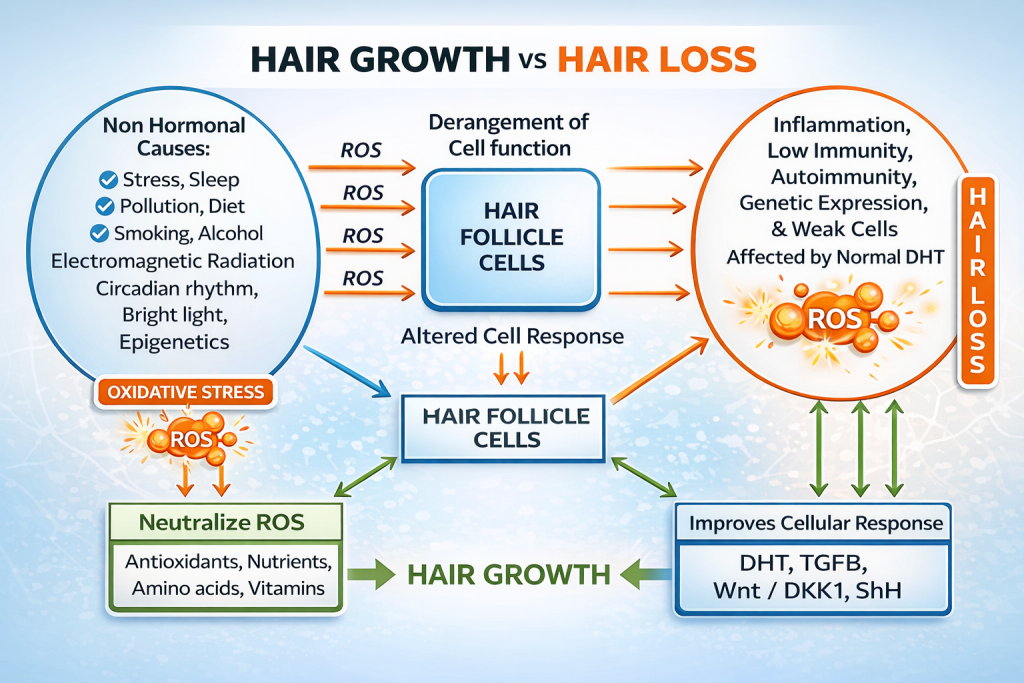
Again, take antioxidant rich diet. A diet rich in antioxidants can block the DHT (dihydrotestosterone)-induced release of TGF-β (transforming growth factor-β). They can neutralize reactive oxygen species (ROS), which are sources of microinflammation. These are the major reasons for hair loss. Antioxidants mostly come from colorful fruits and vegetables.
Stress, sleep, and lifestyle
Stress reduction
Higher level of stress, pollution, lack of sleep, fitness obsession, overwork, restricted eating, smoking, alcohol, erratic lifestyle, environmental, and epigenetic factors all lead to a higher level of reactive oxygen species (ROS) generation. These ROS degrade the cellular environment and lead to TE.
Thyroid disorders, polycystic ovary syndrome (PCOS), cardiovascular disease, diabetes, and hypertension patients also have a high ROS level, and all of them have a higher rate of TE. Mindfulness, Cognitive Behavioral Technique, relaxation, and moderate exercise can reduce TE triggered or worsened by stress. Psychological support is also important because hair loss can be emotionally heavy.
Gentle hair care
Heavy chemical use, very tight hairstyle can cause hair loss. Avoid traction hairstyles, harsh chemical treatments, and excessive heating. Use soft tools and mild cleansing to reduce breakage.
Scalp and topical therapies
- Androgenetic alopecia treatment includes minoxidil use. It increases Anagen duration and can improve patterned thinning. It’s a mainstay for many patients. It can be combined with systemic approaches when appropriate.
- Studies have found that increasing blood flow through hair follicles increases hair growth. Several oil massages give essential fatty acid supply, while massage can increase the blood flow to the hair follicles. Among them, rosemary oil is as promising as the use of minoxidil.
- Several herbal therapies have been found to be effective for hair growth. Onion juice is rich in sulfur and phenolic compounds. In a clinical study 87% of participants had AA. They had a complete hair restoration than placebo group with topical onion juice massage. The only problem with onion juice is it’s unpleasant smell.
- Pumpkin seed oil is rich in phytosterols, and it is promising in Androgenetic alopecia. Olive oil has Oleic acid, vitamin E, and antioxidants. Coconut oil has Lauric acid and anti-fungal properties. These fatty acids are anti-microbial and anti-inflammatory to the scalp.
- Studies found that oil applications on the scalp help to absorb these fatty acids through the hair follicles. They increase blood circulation to the follicles. They provide deep moisture, reduce scalp irritation, strengthen hair follicles, and promote hair regrowth. Coconut oil can easily penetrate the hair shafts and can reduce hair protein loss, thus protecting the hair from loss. Their anti-microbial properties help to fight scalp infections and reduce dandruff. Some people ask whether coconut oil stops hair falls? According to the studies it is clear that coconut oil, rosemary oil, olive oil, all are helpful to stop hair fall.
- Henna is a traditional dye for hair. But it has anti-bacterial and anti-inflammatory potential. With all plant therapies, henna has the biggest impact on hair regrowth density. Their scalp application was found to reduce scalp testosterone level which is the main reason of AGA. Henna is also nourishing to the hair shafts.
- Some studies suggest that traditional use of honey and amla on scalp have some potential to reduce hair fall because of their anti-microbial and anti-oxidant activity. They help to reduce oxidative stress of hair follicles and microbial activity, thus help to reduce hair fall.
Manage hormonal and autoimmune contributors for hair loss
Thyroid disorders
Thyroid hormone imbalance can lead to hair shedding. Both hypothyroidism and hyperthyroidism can cause scalp skin damage. So always make sure thyroid disorders are under proper treatment. If thyroid disorders are well controlled hair fall can be minimized.
PCOS or other androgen excess
Women with polycystic ovarian syndrome (PCOS) face extra androgen hormone level. A well-controlled diet and proper medications can reduce PCOS level as well as hair losing. Usually, PCOS patients suffer from vitamin D deficiency simultaneously. With PCOS treatment they also need to correct vitamin D deficiency level.
How can I stop hair fall? Practical “what to do now” checklist if you’re experiencing meaningful hair loss.
If your hair loss is seriously very high, at least more than 100 strands you need to take some initial steps.
- At first take photos to document progression (top, front, sides).
- Book a visit with a dermatologist or primary care clinician for evaluation.
- Ask for lab tests: Serum vitamin D, CBC, ferritin, TSH, free T3, T4, and other tests your clinician thinks appropriate.
- If vitamin D is low, discuss a safe supplementation plan and follow-up testing to target a guideline-based level. Safe intake can be 2000-5000 IU daily. Always monitor serum levels. Combine with minoxidil, biotin if needed.
- Expose to sunlight for 15-20 min daily midday on arms/legs. Take vitamin D rich foods: fatty fish, eggs, fortified milk, yogurt etc.
- Avoid high-dose vitamin D self-prescribed supplementation.
- Review all your recent medications, illnesses, weight loss, and hair care practices, any dietary restrictions for proper diagnosis.
- For best results use combined therapy. When treat deficiencies use topical minoxidil and other prescribed drugs for pattern thinning, also make sure proper nutrients intake and oil/henna etc. massage rather than expecting one single fix.
How to Avoid Hair Fall
- Daily sun: Take a sunbath daily for 15-30 min without sunscreen, midday.
- Diet: Make your diet rich with diversified nutrients. Add Salmon (570 IU/3 oz), mushrooms, vitamin D supplements if vegan, fortified milk/ yogurt, fortified egg.
- Lifestyle: Use less full coverage dress, balanced and anti-inflammatory food intake. Control your stress level with adequate sleeping, healthy food intake, and regular exercise.
- Practice regular hair care with oils that are proven to reduce hair follicle health deterioration and microbial attack.
Do annual screenings for at-risk groups. Early fix halts hair fall progression.
Summary
- Vitamin D receptors are present in hair follicles, and VDR signaling is implicated in hair cycle regulation.
- Observational studies show lower serum 25(OH)D in patients with alopecia areata, telogen effluvium, and in some cohorts of Androgenetic alopecia.
- Other common causes of hair loss include iron deficiency, thyroid disease, genetics, FAD diets, medications, and scalp disorders. So, holistic evaluation is essential.
- Vitamin D testing and repletion should follow clinical guidelines; avoid unsupervised mega doses.
Final Thoughts
If you’re reading this because you’ve noticed more hair in your brush or a widening part, I know that can feel alarming. The good news is that many causes of hair loss are identifiable and treatable. Vitamin D deficiency is a plausible and sometimes treatable contributor. Testing for it is reasonable as part of a broader workup, but it’s rarely the only piece of the puzzle. The wisest path is a systematic one to follow. At first, get a proper diagnosis. Correct any deficiencies under medical guidance, and pair that with targeted dermatologic treatments and gentle, supportive lifestyle changes.
If you think you need vitamin D or other things, you can have from the following links.
B.Sc, M.Sc (Food And Nutrition) (DU)
Clinical Dietitian and Nutritionist.
Lubana General Hospital & Cardiac Center.
Dhaka, Bangladesh.